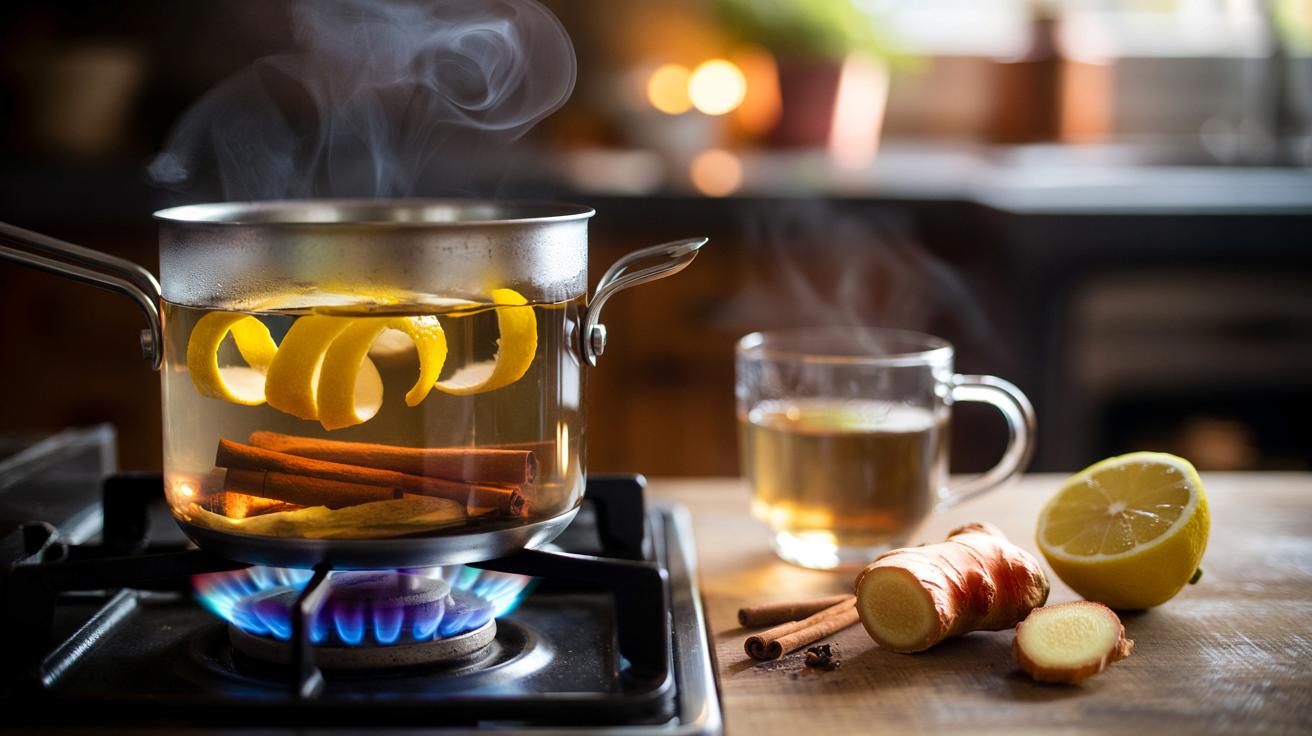
The kitchen was quiet except for the tiny, impatient hiss of a pot on the stove. Inside, a swirl of lemon peels, crooked sticks of cinnamon and rough chunks of ginger were dancing in boiling water, filling the whole room with the smell of winter and home. No tea bag, no fancy superfood powder, just three things you could pull from almost any cupboard.
On TikTok and Instagram, the same scene is on repeat: someone leans in, inhales the steam, then whispers that this simple mix “burns fat”, “flushes toxins”, “boosts immunity overnight”. You can almost hear the views climbing with every bubble in the pot.
One small potion, a lot of big promises.
Why this simple mix suddenly feels like magic
The first thing that hooks people is sensory, not scientific. The scent hits you before any so‑called detox effect does. Fresh lemon peel cuts through the air, cinnamon brings a bakery warmth, ginger adds that spicy tickle in the throat. It smells like comfort, like someone is taking care of you.
For many, that alone already feels like a kind of healing.
We’ve all been there, that moment when you come home exhausted, scroll for a “natural remedy” and latch onto the first thing that looks doable. This potion looks incredibly doable. Three ingredients, some water, five to ten minutes on the stove. It’s low effort, high atmosphere. And that atmosphere is part of why people swear by it.
Scroll through wellness groups and you’ll see the same story told a hundred ways. A woman in her forties swears that boiling lemon peel, cinnamon and ginger every night helped her get rid of bloating. A student explains how it replaced their third coffee and “saved” their exam period. Another person claims they lost five kilos in a month “thanks to this miracle tea”.
The comments are full of hearts, “trying this tonight”, and “my grandma used to do this”. Far from lab results, this is word-of-mouth on Wi-Fi. People don’t quote studies, they quote their aunt, their neighbor, a stranger with nice lighting and a cropped hoodie. What’s really moving the trend isn’t proof. It’s stories.
Behind the stories, there is at least some logic. Lemon peel is rich in aromatic oils and compounds like flavonoids that give it that sharp, slightly bitter edge. Ginger contains gingerols, which have been studied for their anti-inflammatory and digestive effects. Cinnamon brings cinnamaldehyde, linked to better blood sugar regulation in some research.
Boiled together, they create a hot, aromatic drink that can stimulate saliva, bile and gastric juices, which may ease digestion for some people. The heat of the drink itself relaxes the stomach a little and encourages you to slow down. So yes, there are plausible reasons people feel “lighter” after drinking it. The trouble begins when a cup of herbal water is sold as a cure‑all.
➡️ China planted so many trees in the Taklamakan Desert that it now absorbs CO2
➡️ Both gravely ill, a therapy dog and a teenager meet in hospital and fight side by side to heal
How people actually use it (and what really helps)
The basic method is almost disarmingly simple. You take the peel of half an unwaxed lemon, preferably organic if you can, and slice it into strips. You add one or two sticks of cinnamon or a teaspoon of cinnamon chips, plus a few slices of fresh ginger root, about the size of your thumb. Then you cover everything with around half a liter of water.
Bring it to a gentle boil and let it simmer for 10 minutes. The water turns a soft golden color, the ginger bites your nose a bit, the cinnamon rounds it out. Strain into a mug and drink it warm, once or twice a day, usually in the morning on an empty stomach or in the evening after a heavy meal. Some add a teaspoon of honey once it cools slightly, both for taste and an extra soothing touch.
This is where expectations tend to outrun reality. People start drinking it hoping it will melt belly fat, erase sugar cravings and “clean the liver” in a week. They ignore everything else: sleep, food, movement, stress. Then they’re disappointed, or worse, they blame themselves instead of the exaggerated promise.
Let’s be honest: nobody really does this every single day for months on end, with a balanced diet and decent habits on top. Most of us improvise. We drink it three days in a row, forget for a week, then restart when we feel guilty after a big dinner. And that’s okay. The real benefit often lies in what this ritual replaces: a late soda, another coffee, a sugary dessert. The drink doesn’t work magic alone; it creates a pause where better choices can slip in.
Sometimes, what heals us is not the ingredient list, but the fact that we decided to slow down, boil water, and care for ourselves on purpose.
- Digestive comfort
Lemon peel, ginger and cinnamon may help some people feel less heavy after meals. The warm drink supports hydration and encourages you to eat more mindfully. - Gentle energy lift
Ginger and cinnamon have a mild stimulating effect without the crash of caffeine. Many people use this mix as a mid‑afternoon pick‑me‑up. - Blood sugar awareness
Some studies link cinnamon with better blood sugar control. It’s not a treatment, but it can nudge you into paying more attention to what you eat. - Hydration ritual
Replacing sugary drinks with this infusion cuts empty calories and supports daily hydration, which quietly impacts digestion, skin and focus. - Soothing evening routine
Sipping this in the evening can become a signal for the body to wind down. That calmer state indirectly helps weight regulation, cravings and mood.
What this drink can’t do for you (and what it quietly can)
Once you strip away the filters and dramatic claims, this mix is not a miracle detox, a fat burner, or a medicine. Your liver and kidneys already detox every minute you are alive, with or without lemon peel. Ginger and cinnamon don’t magically spot‑reduce belly fat. They don’t cancel a fast-food week, and they definitely don’t replace a doctor when something feels wrong.
Yet that doesn’t make the drink useless. *It just makes it honest.*
What it truly offers is small, repeated nudges: more warm water, fewer sodas, a calmer stomach, a tiny comfort ritual you can hold onto when life feels messy. Those nudges accumulate. You feel a little lighter after dinner, less tempted by late snacks, slightly more grounded at night. That’s not a viral miracle. That’s just how real change quietly starts.
| Key point | Detail | Value for the reader |
|---|---|---|
| — | Natural mix of lemon peel, cinnamon and ginger supports digestion and hydration | Helps you understand what this trend can realistically offer your body |
| — | Best used as a daily or near‑daily ritual, not a one‑week “detox cure” | Prevents disappointment and fad-chasing, encourages steady habits |
| — | Works mainly as a comforting, healthier replacement for sugary or ultra‑processed drinks | Gives you a practical, simple step toward better everyday choices |
FAQ:
- Question 1Does boiling lemon peel, cinnamon and ginger really burn fat?
- Answer 1No, it doesn’t literally burn fat. The drink can support digestion and replace higher-calorie beverages, which may help with weight over time when combined with better eating and movement.
- Question 2Can I drink this mixture every day?
- Answer 2Most healthy adults can drink it once or twice a day. If you’re pregnant, breastfeeding, on blood thinners or diabetes medication, talk to a health professional first, especially because of ginger and cinnamon.
- Question 3Should I use fresh lemon peel or can I use dried?
- Answer 3Fresh peel gives more aroma and essential oils, but dried peel works too. Prefer organic or unwaxed lemons so you’re not boiling pesticides and wax along with the zest.
- Question 4Is it better hot or cold?
- Answer 4Warm is ideal for digestion and comfort. You can let it cool and drink it iced in summer, but many people feel the “soothing” effect more clearly when it’s hot or at least lukewarm.
- Question 5Can I sweeten the drink without cancelling the benefits?
- Answer 5A little honey or a small amount of sugar won’t erase the benefits, especially if you’re replacing soda or very sweet drinks. Just keep it light so it stays a health-supporting habit, not another dessert.